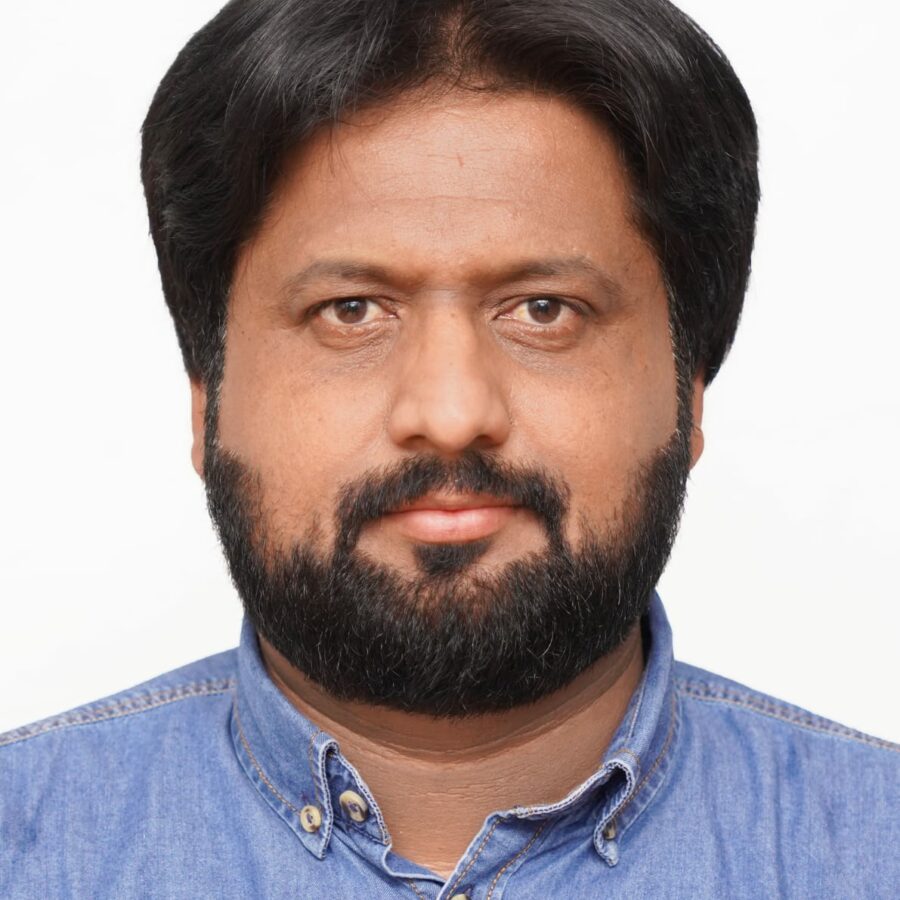
Muhammad Yasir Abdur Rehman
Universidad de Córdoba
Analytical Chemistry (FQM-186)
Grupo de investigación
Supramolecular Analytical Chemistry (FQM-186)
Sobre mí
«I am a Postdoctoral researcher working on the MDietSafe project funded by the European Commission under the Marie Skłodowska-Curie Actions Postdoctoral Fellowship (MSCA-PF).
My PhD research focused on molecular responses to arsenic exposure through drinking water, integrating transcriptomic, epigenomic, and miRNA-level analyses in human blood samples. I have hands-on experience in both analytical and molecular biology techniques, including HGAAS, HPLC, PCR, RT-PCR, genotyping, and microarray platforms (Agilent and NimbleGen), as well as downstream computational analysis using genomic databases and bioinformatics tools. I also have experience in environmental contaminant monitoring, particularly emerging pollutants such as PPCPs, antibiotics, and PFAS in water and fish matrices, using GC-MS and LC-MS based workflows.
I have published 16 peer-reviewed articles in SCI-indexed journals. My international research experience includes research stays in the Netherlands, China, and Taiwan, prior to joining the University of Córdoba, Spain.»
Líneas de investigación
Environmental Analytical Chemistry
Resultados destacables
The MSCA project is currently ongoing, and results will be disseminated through peer-reviewed publications once finalized.
From my previous research work, the most significant outcome was the identification of arsenic-associated alterations in biological pathways linked to both differential gene expression and DNA methylation in exposed populations. This provided mechanistic evidence connecting environmental exposure to molecular-level changes, helping to strengthen the biological plausibility of arsenic toxicity beyond exposure assessment alone.
Vocación
Growing up in a region where environmental contaminants are directly linked to everyday exposure, I became aware early on that drinking water quality can have measurable health consequences. Arsenic contamination in groundwater across parts of Pakistan was the first problem that made this concern concrete for me and became my first focused research problem during the early phase of my research career. I worked with a research group in the Netherlands to investigate this issue, which led to peer-reviewed publications and gave me my first real experience of how state-of-the-art analytical workflows can translate environmental concerns into measurable evidence. Over time, my focus shifted from individual known contaminants to the broader challenge of unknown and unregulated emerging chemicals. The rise of non-targeted and suspect screening approaches made it clear that many exposure risks remain unregulated and poorly understood, especially in complex dietary and environmental systems. This is what led me to my current work on monitoring of unregulated contaminants in the Mediterranean diet, which has numerous health benefits, and keeping it safe from contamination is essential for guaranteeing this intangible cultural heritage. What keeps me in science is not just the presence of these problems, but the fact that the tools to detect and understand them are still evolving faster than our ability to assess their risk.
Deseo científico
My main long-term career goal is to be among the leading researchers in the field of environmental health sciences, focused on investigating human exposure to environmental contaminants through various routes, mainly ingestion (food and drinking water), and integrating exposome-wide approaches primarily comprising metabolomics and toxicogenomics.
Actividades en las que participa